Sоurdough has been getting lots of buzz in kitchens lately , not just as a trend but ’cause it’s a time-honored way to bake. At its core is the sourdough сulture , a little community of wild yeast and good bacteria that turn flour and water into dough , giving it that tangy taste and chewy bite. People are trying all kinds of sourdough treats at home , and one of the coolest is sourdough bаgels . They’re like regular bagels , but with that special sourdough twist that home bakers can’t get enough of.
The rise of homemade sourdough bаgels isn’t random . Their yummy flavor , nice chew , and artisanal vibes beat anything you get off the shelf. Plus , making them yourself means you can add your favorite toppings or mix-ins and really make them your own. This guide will walk you through every step of baking your own sourdough bаgels , so you can enjoy that proud moment when you pull them fresh from the oven .
What Makes Sourdough Bagels Unique?
Sourdough bаgels stand out from regular bagels in more ways than one . It’s all in the fermentation. Wild yeast and lactic acid bacteria team up to make the dough rise and build that bold flavor . Over time , the dough turns more digestible by breaking down gluten and phytic acid , so it’s easier on your stomach. And the long ferment means you get layers of taste you just don’t find in quick-rise bagels.
1.1 The Science Behind Sourdough
The magic is in the slow work of microbes eating the sugars in the flour , then pumping out carbon dioxide so the dough puffs up . That slow rise not only makes it taste better but might even help our bodies absorb nutrients easier . The light sourness and chewy feel are a direct result of this process .
1.2 Comparison with Traditional Bagels
Traditional bagels use commercial yeast for a fast lift but miss out on deep flavor . Their recipe is simple—flour , water , salt and yeast . Sourdough bаgels swap in a bubbly starter instead of yeast , making the flavor richer and the texture chewier , with a crust that snaps when you bite it .
Ingredients for Sourdough Bagels
To bake great sourdough bаgels you need just a few things , but each one matters. Pick good quality stuff for best results .
2.1 Essential Ingredients
- Sourdough Starter: This is your yeast and bacteria power , so make sure it’s active and bubbly .
- Bread Flour: High protein flour gives that classic chew .
- Water: Use filtered or no-chlorine water so nothing kills your starter .
- Salt: For flavor control , and it helps strengthen the dough .
- Sweetener: A little honey or malt syrup for color , taste and a shiny crust .
2.2 Optional Add-Ins and Toppings
Try these to switch things up :
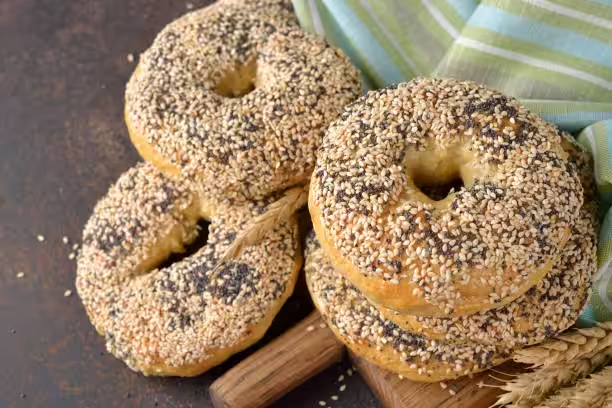
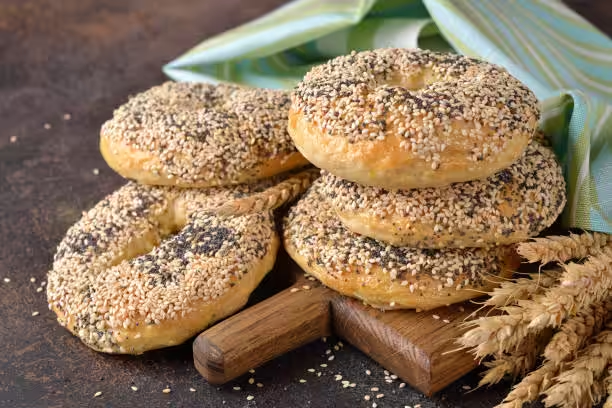
- Seeds: Sesame or poppy add crunch and look cool .
- Flavors: Onion flakes , garlic bits or herbs for extra kick .
Step-by-Step Sourdough Bagel Recipe
3.1 Preparing the Dough
Mix your dry stuff in a big bowl first , then stir in the starter and water bit by bit until a shaggy dough forms . Tip it out onto a floured surface and knead for about 10 minutes until it’s smooth and just a bit tacky .
3.2 Fermentation Process
Put the dough in a greased bowl , cover it loosely and let it sit at room temp for 4-6 hours . You want it about doubled in size .
3.3 Shaping the Bagels
Gently punch down the dough and divide it into pieces (around 100 g each) . Roll each into a ball , poke a hole in the center , then stretch it out into a ring .
3.4 Boiling the Bagels
Heat a pot of water to a gentle boil and add a spoonful of your sweetener . Drop in the bagels for about 30 seconds per side — this gives them that chewy crust .
3.5 Baking the Bagels
Preheat the oven to 450°F (232°C) . Place the boiled bagels on a parchment-lined tray and bake for 15-20 minutes until golden and firm . Tap the bottom ; if it sounds hollow , they’re done .
Tips for Perfect Sourdough Bagels
4.1 Common Mistakes to Avoid
- Don’t over-knead or you’ll end up with tough bagels , under-knead and they’ll fall flat .
- Rushing fermentation makes bland bagels , so give it time .
4.2 Storage and Freshness Tips
- Keep bagels in a paper bag at room temp for up to two days .
- For longer , freeze cooled bagels in a sealed bag and toast from frozen .
Frequently Asked Questions (FAQs)
5.1 How can I tell if my sourdough starter is active?
It should double in 4-6 hours after feeding , be bubbly and smell slightly tangy .
5.2 Can I use all-purpose flour instead of bread flour?
You can , but bread flour gives better chew because of more protein .
5.3 Can I make sourdough bagels without a sourdough starter?
No , the starter brings wild yeast and that special sour flavor .
5.4 How do I store leftover bagels?
Paper bag at room temp for a day or two , or freeze them in an airtight bag .
5.5 What are the best toppings for sourdough bagels?
Sesame , poppy , everything spice blends or flavored cream cheeses work great .
Conclusion
Baking your own sourdough bаgels can be a fun project . With the right mix of ingredients , a little patience , and these steps , you’ll pull out bagels every morning that taste next-level .
References and Resources
For more tips and recipes check out :
sourdough bagels recipe
Equipment
- 1 mixing bowl
- 1 dough scraper
- 1 kitchen scale
- 1 rolling pin
- 1 parchment paper
- 1 large pot for boiling
- 1 slotted spoon
- 1 baking sheet
- 1 oven
Ingredients
- 250 g all-purpose flour
- 150 g bread flour
- 200 g active sourdough starter Ensure your sourdough starter is active and bubbly for the best results.
- 200 g water Room temperature
- 10 g salt
- 1 tablespoon honey or sugar For boiling water
Instructions
- In a mixing bowl, combine the all-purpose flour, bread flour, active sourdough starter, and water. Mix until a shaggy dough forms.
- Add the salt and knead the dough on a floured surface for about 8-10 minutes, until smooth and elastic.
- Place the dough in a lightly greased bowl, cover it with a damp cloth, and let it rise at room temperature for 1-2 hours, or until it has doubled in size.
- Once the dough has risen, gently deflate it and divide it into 6 equal pieces. Each piece should weigh around 80-90g.
- Shape each piece into a round ball by pulling the edges toward the center. Let them rest for 10 minutes.
- To shape the bagels, use your fingers to poke a hole in the center of each ball and gently stretch the hole to form a ring.
- Place the formed bagels on a parchment-lined baking sheet, cover them, and let them rise for another 30-60 minutes until slightly puffy.
- Preheat your oven to 450°F (230°C) and bring a large pot of water to a boil. Add honey or sugar to the boiling water.
- Once the water is boiling, boil each bagel for about 30 seconds on each side. Use a slotted spoon to remove them and place them back on the baking sheet.
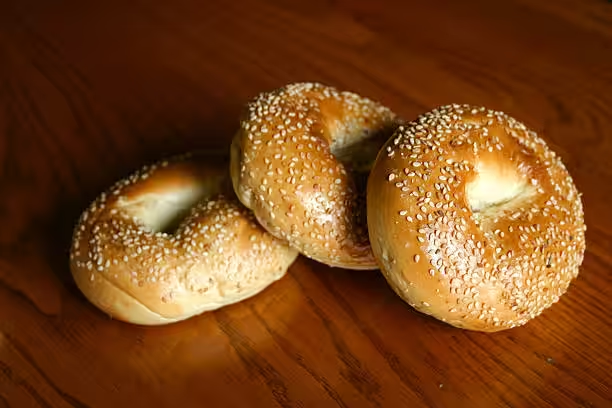
- If desired, sprinkle your chosen toppings on the bagels before baking.
- Bake the bagels for 15-20 minutes until golden brown and cooked through.
- Let the bagels cool on a wire rack before serving.